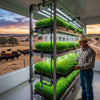
The Future of Fodder: Could High-Tech Hydroponics Be the Secret to Lower Feed Costs in Texas?
7 min reading time
7 min reading time
⏱️ Reading Time: 6 minutes
In this post, we’re digging into the high-tech world of hydroponic fodder: a game-changer for Texas homesteaders looking to beat the heat and lower their overhead. You’ll learn how these "living mats" of green grass provide superior nutrition for your flock, how automation is making it easier than ever to manage, and whether the cost-to-benefit ratio actually makes sense for a Wise County farm. We’re moving beyond the bag and looking at how technology is bringing the pasture right inside your barn.
If you’ve lived in North Texas for more than a minute, you know the struggle. One month we’re praying for rain, and the next, we’re watching our pastures turn into a crunchy, brown landscape that looks more like a desert than a chicken run. When the grass dies back, your birds lose out on those essential vitamins and minerals they get from fresh greens.
To make matters worse, the cost of high-quality grains and pellets keeps climbing. While we take a lot of pride in our 20% Layer Pellet complete feed, we know that supplementing with fresh greens is the "secret sauce" for vibrant yolks and healthy birds. But how do you provide fresh grass in the middle of a July scorcher?
The answer might just be sitting in a climate-controlled room. High-tech hydroponic fodder systems are moving out of the massive commercial operations and onto the small-scale homestead. It’s essentially a way to grow a field’s worth of grass in the footprint of a closet.
At its simplest, hydroponic fodder is a method of sprouting cereal grains: like barley, oats, or wheat: in a soil-less environment. You take a tray of dry seeds, add a little water and light, and in about seven days, you have a 6-to-8-inch tall "mat" of lush green grass.
The "high-tech" part comes into play with the systems that manage the environment. Modern commercial-grade systems for homesteaders now include:

When a seed sprouts, it undergoes a biological transformation. It releases enzymes that make the nutrients within the seed much more bioavailable. For our chickens, this means they aren't just eating a dry grain; they are eating a living plant that is packed with:
Think of it as a "superfood" for your birds. They don't just eat the green tops; they eat the entire mat: roots, seeds, and sprouts. There is zero waste. 🐔
In the past, growing fodder was a bit of a chore. You had to manually rinse trays multiple times a day to prevent mold. If you forgot once during a humid Wise County afternoon, your entire crop was ruined.
The latest tech has changed the game. Small-scale "plug-and-play" systems can now produce 20 to 30 pounds of fodder a day with less than 15 minutes of human labor. While a massive commercial facility like Eden Green in Cleburne might cost millions, a high-tech homestead setup can be built or bought for a fraction of that, often paying for itself in feed savings within a year or two.
Tip: If you’re just starting out with a Chicken Starter Pack, you might stick to high-quality pellets first. But once your flock grows, fodder becomes a very attractive option for cutting costs.
Let’s talk turkey (or chicken). Commercial fodder sprouting can cost between $60 and $100 per ton of produced feed. Compare that to the price of high-quality bagged grain, and the savings start to look pretty impressive.
However, you have to factor in the "Hidden Costs":
Bottom Line: For a small backyard flock of five birds, high-tech hydroponics might be overkill. But for the serious homesteader with 50+ birds, French Pearl Guineas, and maybe a milk cow, the savings are massive. You are essentially turning 1 pound of dry seed into 6 to 7 pounds of succulent green feed.

The biggest hurdle for any Texas fodder grower is mold. Our high humidity is the perfect breeding ground for fungal issues that can make your birds sick.
This is where the "High-Tech" part is non-negotiable for us. Smart systems use Acoustic Sensors or AI-driven monitoring to detect the early signs of rot or stress in the plants. On a homestead level, simply using a system with an integrated Acidified Copper Sulfate rinse or automated ventilation can keep your fodder "clean."
If you do run into health issues with your birds due to environmental stress, we always recommend keeping Merrick's Blue Ribbon Poultry Electrolytes on hand to keep their systems moving.
If you’re ready to dip your toes into the hydroponic waters, here is a quick roadmap:

We love our traditional ways of farming here at Wise County Chicken Farm, but we also believe in using every tool available to keep our animals healthy and our land (and wallets) sustainable. Hydroponic fodder isn't just a "science project": it’s a viable way to combat the unpredictable Texas climate and ensure our birds have the very best, even when the creek runs dry and the grass turns to dust.
Whether you’re raising Red Sex Link Day Old Chicks or managing a flock of stately Golden Laced Wyandottes, adding a bit of "tech-grown" green to their diet is a move they’ll thank you for with every egg.
Disclaimer: The information provided in this blog post is for educational purposes only. While hydroponic fodder is a nutritious supplement, it should be introduced gradually to your flock's diet. Always consult with a poultry nutritionist or veterinarian if you notice significant changes in your birds' health or egg production. Wise County Chicken Farm is not responsible for any mold or health issues resulting from DIY hydroponic setups.
Keep those waterers full and those spirits high! If you need anything for your flock: from Predator Proof Wire to a friendly word of advice: come see us. We're always here to help y'all succeed.
Warmly,
The Wise County Chicken Farm Family 🤠🐔


